Ear training
made simple

Hear a chord and know what it is. Pick out a melody without hunting for it. Trill turns ear training into a 10-minute daily habit — chords, intervals, perfect pitch and melodies, built like a game so you actually keep going.



Play songs
by ear
Every song you love is just a few chords and a melody. Trill trains the link between what you hear and what your hands play — until recognizing a chord feels as natural as recognizing a friend's voice.
-
Hear it
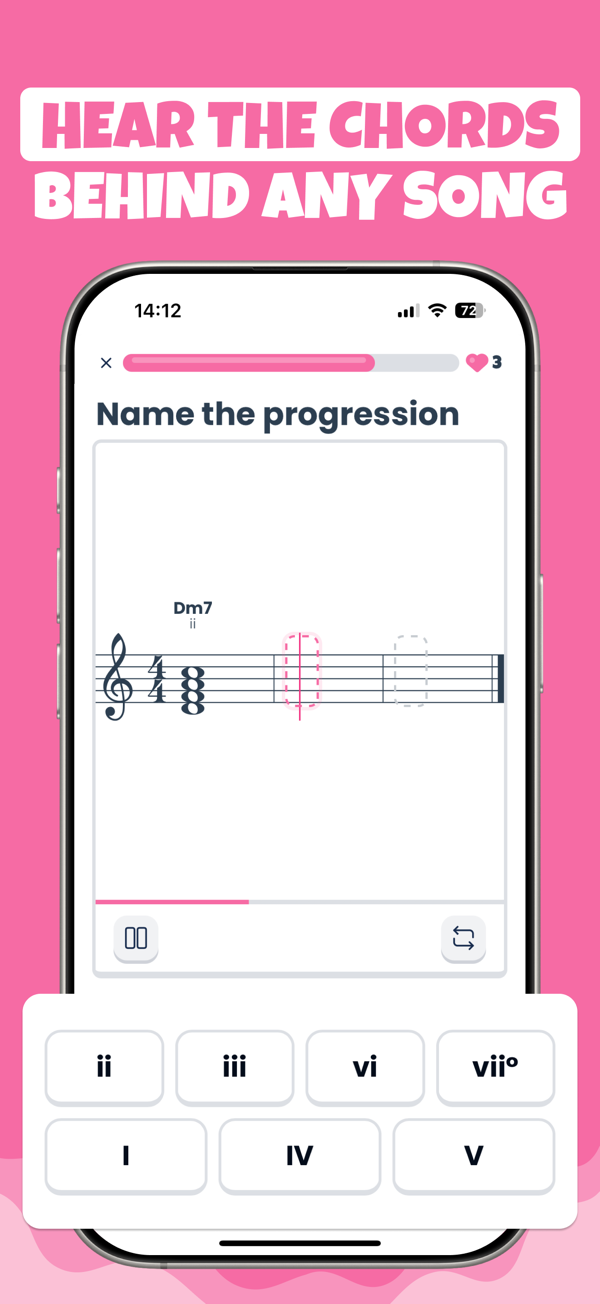
A chord, an interval or a short melody plays — the same sounds you meet in real songs.
-
Recognize it
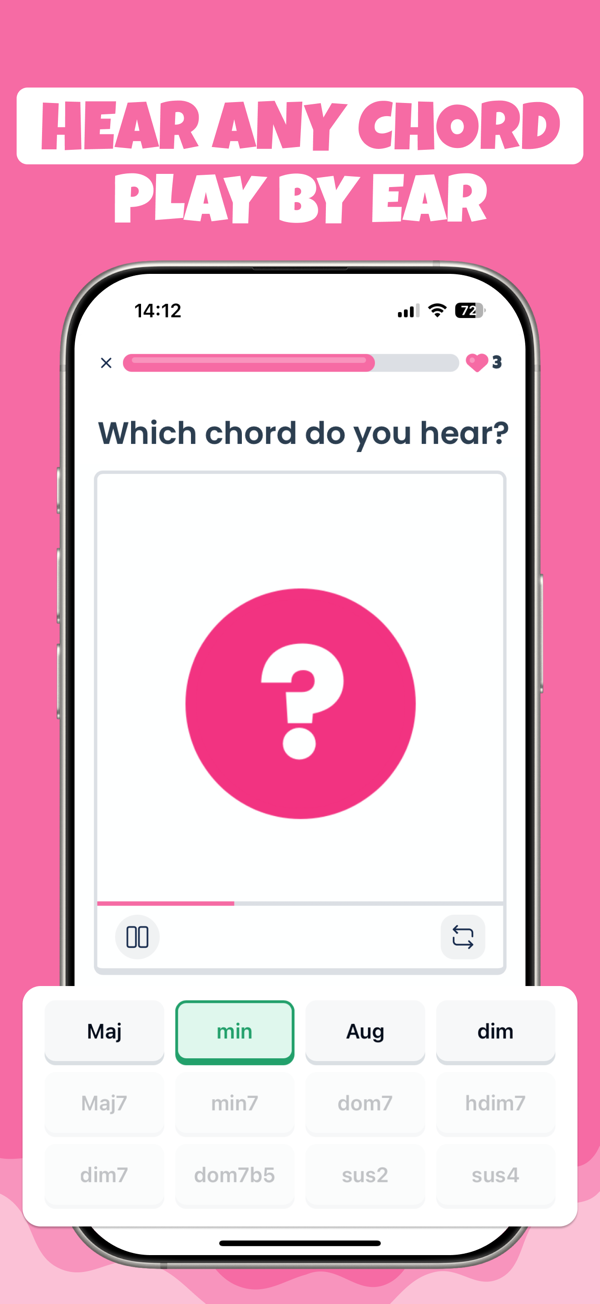
Name what you heard. Instant feedback teaches your ear the difference between close answers.
-
Play it back
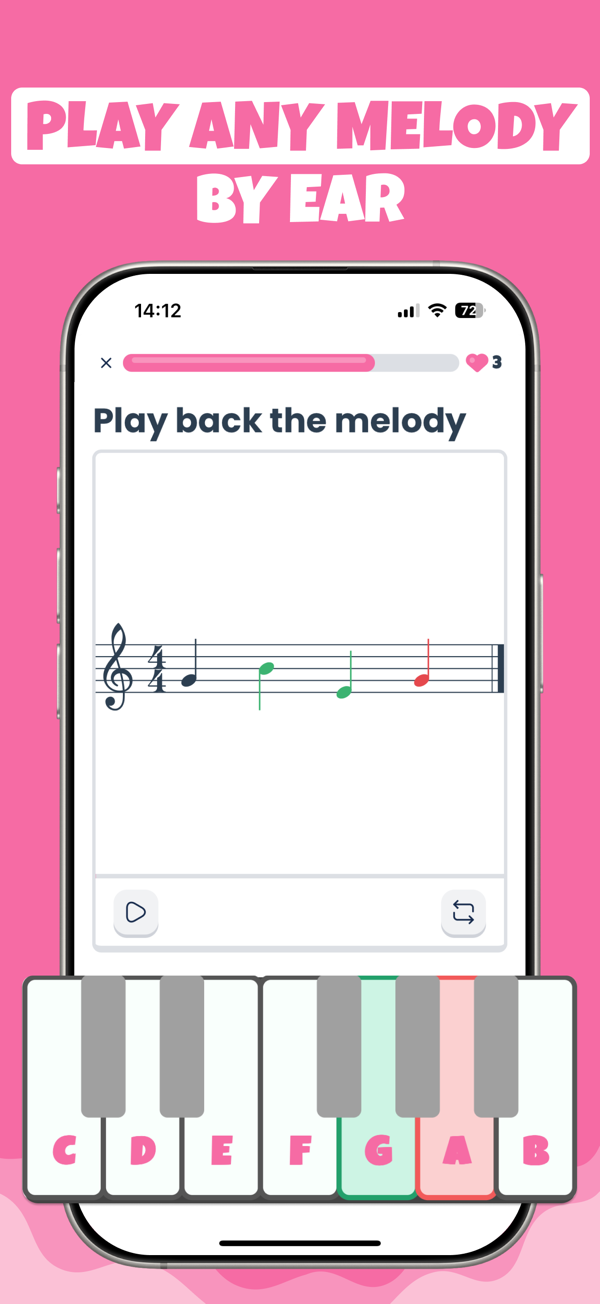
Melodic dictation puts it on a keyboard: hear a phrase, play it back, note by note.
-
Use it on your instrument
From Am to a full progression — hear the changes coming and play along without tabs.


Stop guessing. Start hearing.
Most musicians don't have a talent problem — they have an untrained ear. Ten minutes a day is enough to rewire how you listen.

Before Trill
- Replaying the same bar twenty times to find the chord
- Depending on tabs and chord sheets for every song
- Singing or soloing and hoping it's in tune
- Practicing "when there's time" — and never quite getting there
After a few weeks
- Naming major, minor and seventh chords on the first listen
- Picking out melodies and riffs by ear
- Hearing the progression coming before it arrives
- A streak that keeps you consistent — 10 minutes, every day
Everything your ear needs, in one app
A structured journey from single notes to full chord progressions — plus the practice tools every musician uses daily.
Chords
Major, minor, seventh, sus and inversions — recognized instantly.

Intervals
The alphabet of melody: name any two notes by ear.

Perfect pitch
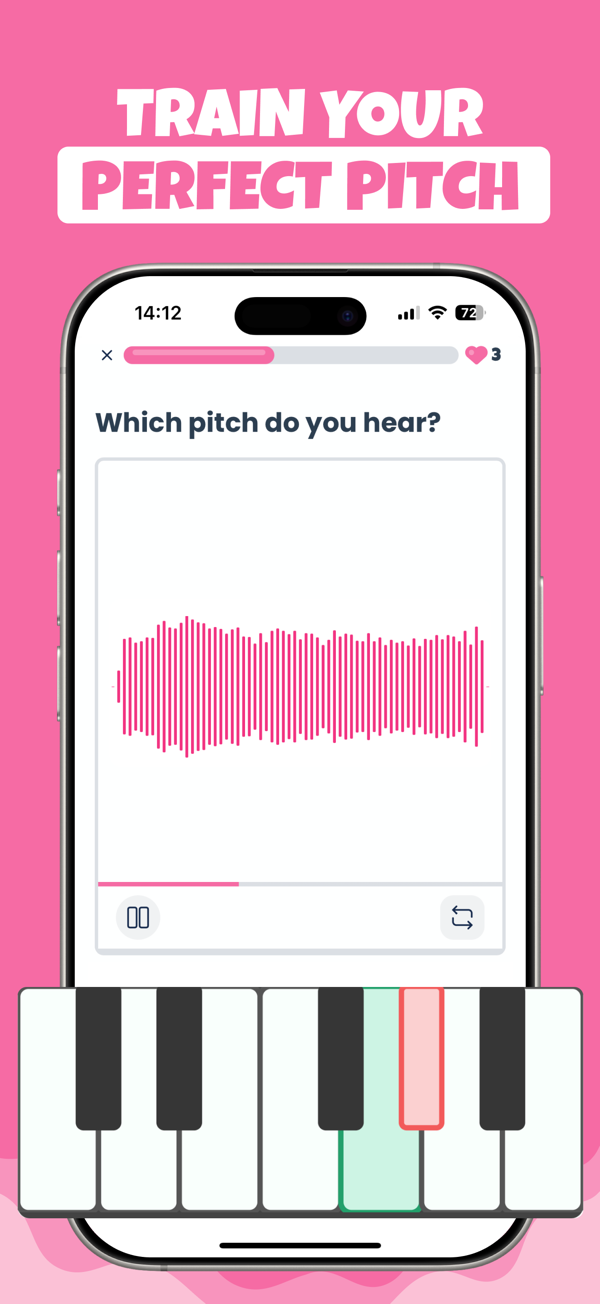
Pitch memory drills that build note recognition without a reference.

Melodies
Melodic dictation: hear a phrase, play it back on the keyboard.

Progressions
Hear I–V–vi–IV and friends — the changes behind every song.
Scales & modes
Major, minor, Dorian, Mixolydian — know the color by ear.

Vocal training
Sing the note, see your pitch live, lock it in tune.

Musician toolkit
Tuner, metronome and chord, scale and interval visualizers.
Serious ear training that feels like a game
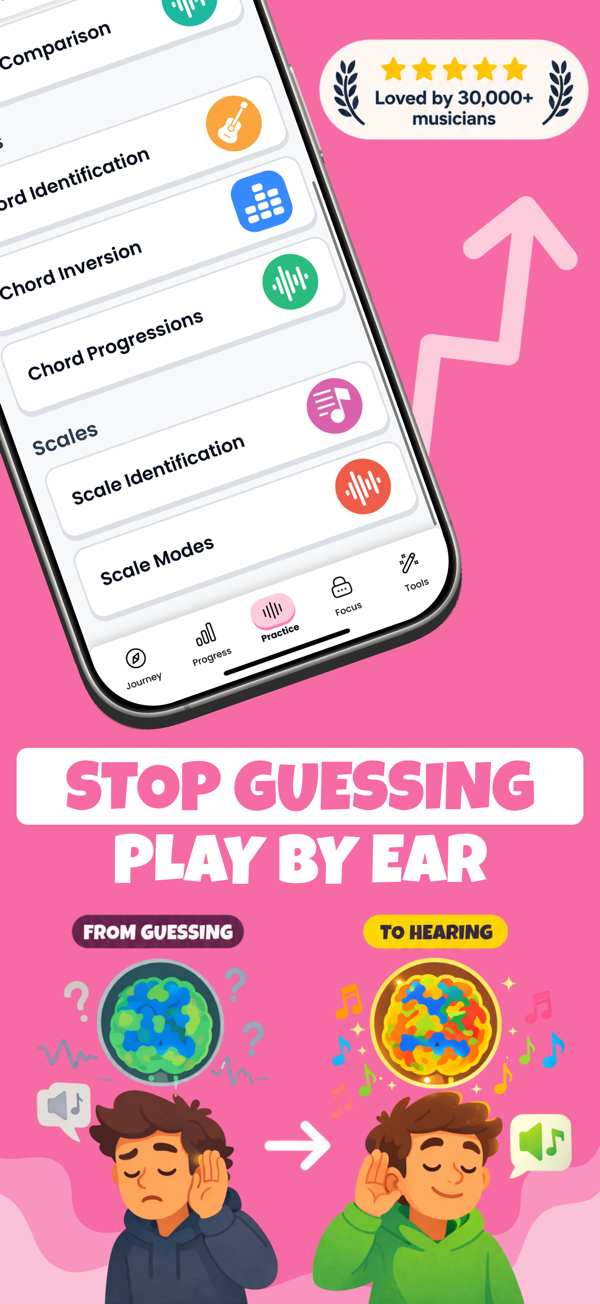
Daily challenges, streaks, levels and collectible badges — built on real exercises: chord recognition, interval identification, melodic dictation, pitch memory and chord progressions.
How Trill works
Your musical ear is like a muscle. Train it a little every day and it becomes instinct.
Start where you are
Tell Trill your goal — play by ear, recognize chords, build perfect pitch — and your level. The journey adapts from single notes to full progressions.

Train 10 minutes a day
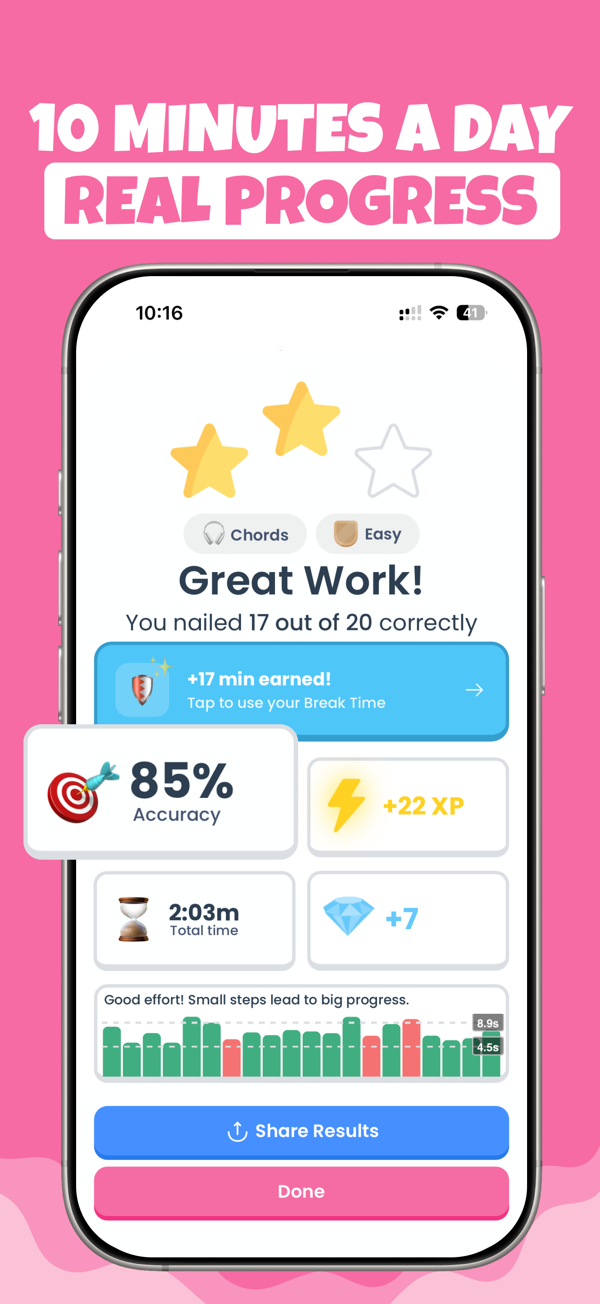
Short, focused sessions: hear it, answer, get instant feedback. Chords, intervals, pitch, melodies, scales and theory — the same way athletes build strength.

Stay consistent, see progress
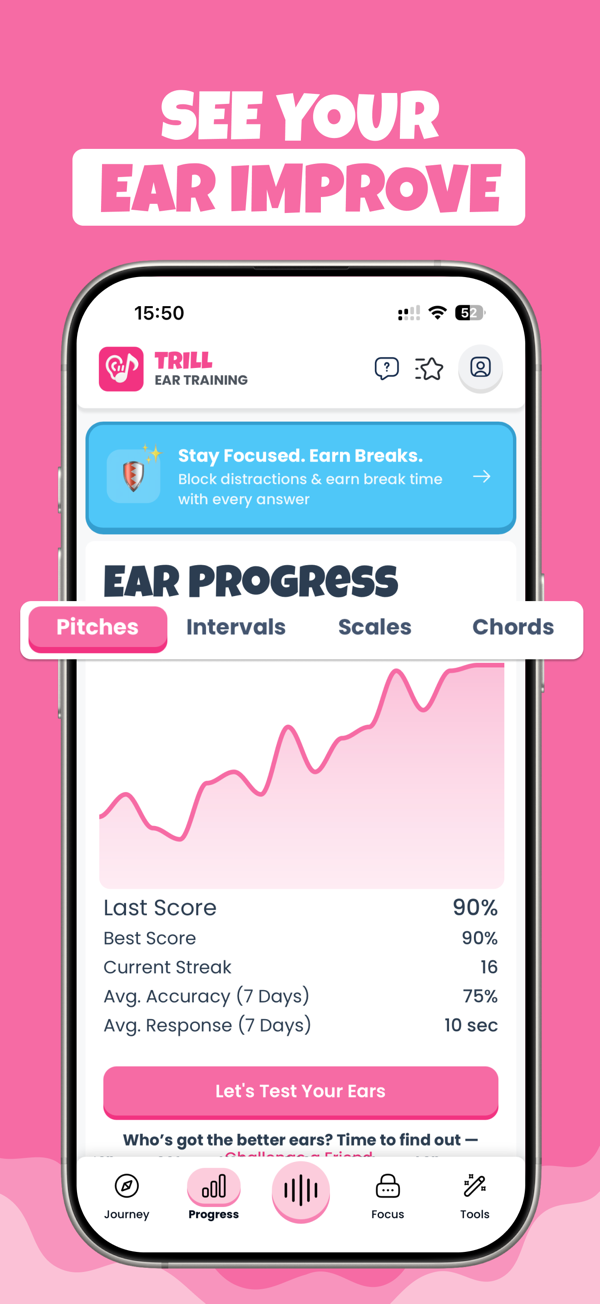
Streaks, XP and badges keep you coming back; the progress dashboard shows your accuracy and speed climbing week over week.
Train first. Scroll later.
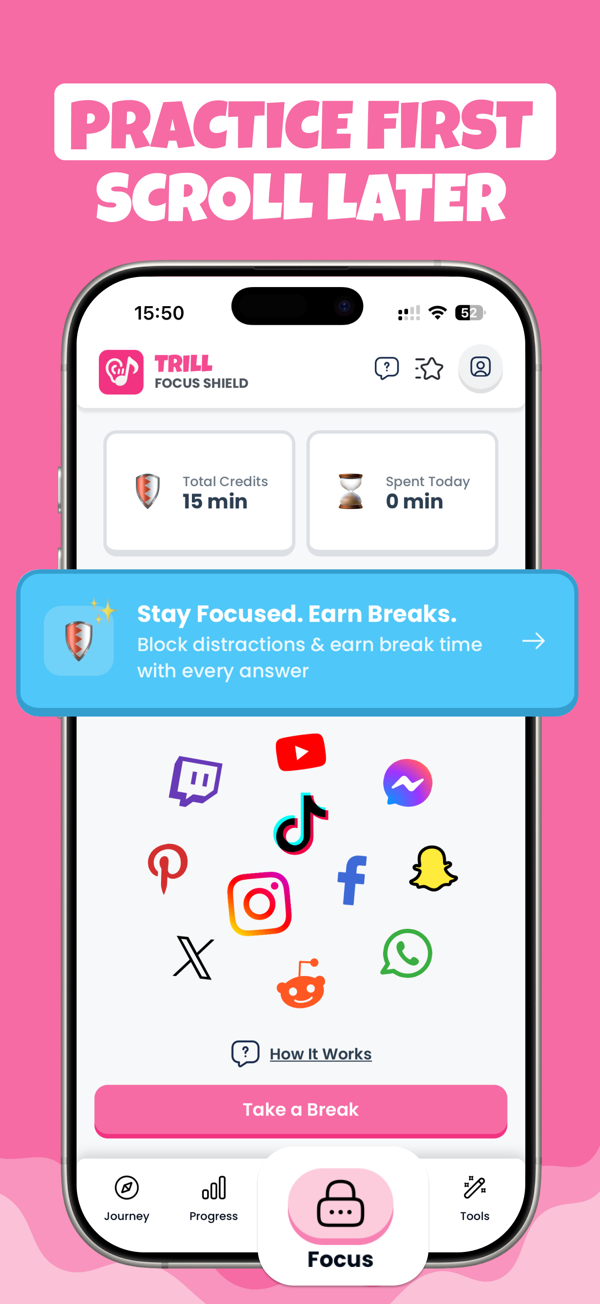
Focus Lock blocks distracting apps — TikTok, Instagram, YouTube — until you finish your daily ear training. Every correct answer earns you break time.
78% of musicians say focus, consistency, structure or time is what blocks their progress — not talent. Focus Lock removes the excuse.
Get Trill
We asked 60,000 musicians why their ear isn't improving
Every musician answers a short survey when they join Trill. The results say it clearly: the problem is almost never talent.
Source: Trill onboarding survey, n≈60,000 musicians (2026). What they want to learn: chord recognition (16.5%), playing by ear (14.7%), perfect pitch (14.3%), interval recognition (13.8%), music theory (13.2%), relative pitch (13.1%). Guitarists (29%) outnumber any other single instrument. Trill is built around exactly this data: 10 focused minutes, a structured path, and streaks that keep you consistent.
Learn the skill, not just the app
Practical guides to every ear-training goal — what it is, how it works, and how to train it 10 minutes a day.
How to Get Perfect Pitch
What perfect pitch really is, whether adults can develop it, and the daily drills that build pitch memory.
Read the guide →Learn to Play Music by Ear
The step-by-step path from "I can't hear it" to picking out songs without sheet music.
Read the guide →Chord Ear Training
How to recognize major, minor and seventh chords instantly — and hear the progression behind any song.
Read the guide →Interval Ear Training
Intervals are the alphabet of melody. Learn to name any two notes by ear with daily identification drills.
Read the guide →Relative Pitch Training
The trainable superpower professionals actually use — and how it compares to perfect pitch.
Read the guide →Ear Training for Guitarists
Learn riffs and solos by ear, hear chord changes coming, and stop depending on tabs.
Read the guide →Ear Training for Singers
Sing in tune, hit intervals cleanly and hold your harmony line — your voice can only match what your ear hears.
Read the guide →Musicians on Trill
4.6★ average across 1000+ App Store ratings.
★★★★★"Coming back to ear training after undergrad and graduate music degrees. This app is working out great for me."
★★★★★"Great app! Clean UI, motivating streaks, and all the tools in one place — highly recommend."
★★★★★"Really great app, my pitch got better after several training sessions."
Frequently asked questions
What is ear training and why does it matter?
Ear training is the practice of recognizing notes, intervals, chords, scales and progressions just by hearing them — the skill behind playing by ear, improvising, singing in tune and transcribing. Your ear works like a muscle: untrained it stays weak, trained daily it becomes instinct. Learn more →
Can I really learn to play music by ear?
Yes — playing by ear is trained relative pitch, and relative pitch is learnable at any age. Most people start recognizing common chords and intervals within weeks of short daily practice. Learn more →
Can adults develop perfect pitch?
True absolute pitch usually develops with early musical exposure, but adults can dramatically improve pitch naming through daily pitch-memory drills — and trained relative pitch covers almost everything perfect pitch is used for. Learn more →
How long does ear training take to work?
Consistency beats intensity: 10 focused minutes a day produces noticeable results within the first weeks. Trill's progress dashboard shows your accuracy and response speed improving session by session. Learn more →
What is Focus Lock?
Trill's consistency feature: it blocks distracting apps (TikTok, Instagram, YouTube…) until you finish your daily training, and correct answers earn you break time. Train first, scroll later.
Perfect pitch vs relative pitch — what's the difference?
Perfect pitch names notes with no reference; relative pitch identifies everything by relationships between notes. Relative pitch is what most professionals rely on — and it's highly trainable. Learn more →
Does it work for guitar? For singing?
Ear training is instrument-independent, and Trill's audience proves it: roughly a third guitarists, a third piano and keys, a sixth singers. There are dedicated guides for both. Guitar → Singing →
Is Trill available on iPhone and Android?
Yes — Trill is on the App Store and Google Play. Your progress, streak and journey are tied to your account, so you can switch devices anytime.
Ear training made simple.
Join 60,000+ musicians who started this spring. 10 minutes a day — your ear does the rest.